8 min read · Academy
Deck Screws: Galvanized vs Stainless, Explained
Galvanized, 304 stainless or 316 stainless: which deck screws stop corrosion, tannin staining and warranty headaches on your build.
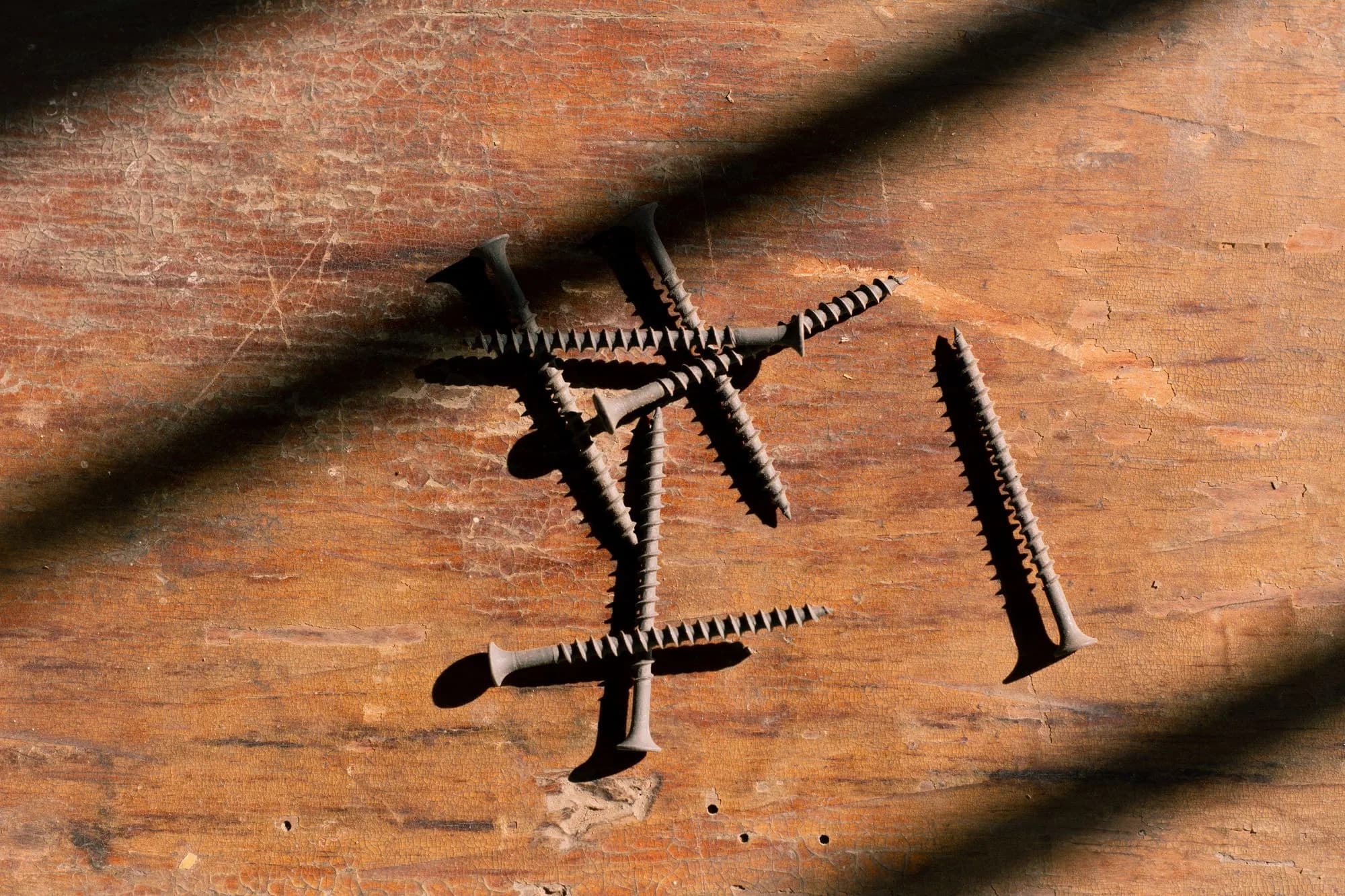
Buy the wrong deck screws and the problem doesn't show up on install day. It shows up two summers later, as black streaks bleeding out of every screw head on your cedar boards, or as a rust bloom working loose the fastener holding your joist down. Getting deck screws right the first time is one of the cheapest ways to protect a build that otherwise cost thousands, and the choice really comes down to three options: hot-dip galvanised, stainless steel, and composite-specific coated screws.
TL;DR
- Hot-dip galvanised (G185) is the accepted minimum spec for standard PT-lumber fasteners.
- Stainless steel, grade 304 for general use and 316 for coastal or high-corrosion sites, costs more but resists corrosion and avoids black tannin staining on cedar and redwood.
- Composite decking usually needs its own coated or composite-rated screw, or a hidden fastener clip system, per the manufacturer's warranty terms.
- The wrong fastener metal against ACQ-treated lumber can trigger galvanic corrosion, sometimes within a single wet season.
- Spend the extra on stainless where it's visible or exposed, and save on galvanised where it's hidden structural work.
Why Does the Fastener Matter as Much as the Lumber?
It's tempting to treat screws as an afterthought once you've settled on framing lumber and decking boards, budgeted with something like the deck material calculator. But a fastener that corrodes, stains or reacts badly with treated lumber chemicals can undermine a deck that's otherwise built to spec. The CPSC estimates around 6,000 people a year are injured by structural failure of a deck, porch, railing or staircase, and while most failures trace back to framing or ledger attachment, a corroded fastener quietly losing its grip is exactly the kind of slow failure that catches homeowners off guard years after the build.
Hot-Dip Galvanised Screws: The Baseline for PT Lumber
Hot-dip galvanised fasteners, typically specified to a G185 coating rating, are the minimum standard for screws going into standard pressure-treated lumber. The zinc coating gives real protection against the copper-based preservatives used in modern PT lumber, and G185 is thick enough to handle the corrosive chemistry involved. For a straightforward PT pine deck where the boards will eventually be painted or left to weather naturally, galvanised screws are a sensible, cost-effective default, and they're what most lumber yards stock as standard.
The catch is durability over the very long term. Galvanised coatings can wear thin at the point where the screw threads bite into the wood, especially with repeated wet-dry cycles, and once the zinc layer is breached the steel underneath is exposed to the same treatment chemicals that made galvanising necessary in the first place. On a deck you expect to keep for 10 to 15 years in a damp climate, that's worth knowing before you commit an entire order to the cheapest galvanised box on the shelf.
Why Do Stainless Steel Deck Screws Cost More, and Are They Worth It?
Stainless steel screws don't rely on a coating at all. The corrosion resistance is built into the metal itself, so there's no thin surface layer to wear through over time. Two grades matter here. 304 stainless is the standard choice for general deck use, and it handles typical PT lumber and most inland climates comfortably. 316 stainless adds molybdenum to the alloy, which meaningfully improves resistance to chloride, and that's the grade worth specifying for coastal decks or anywhere salt air or de-icing salt spray reaches the fasteners regularly.
The extra cost is real, often several times the price of galvanised screws for the same box count, and on a large deck that difference adds up. Whether it's worth paying comes down to two things: how exposed the deck is, and what species of decking you're using. Which brings up the tannin problem.
The Tannin-Staining Problem on Cedar and Redwood
Cedar and redwood are naturally rich in tannins, the same compounds that give both species their warm colour and natural rot resistance. Those tannins react with the trace iron in a galvanised coating, and the reaction shows up as a dark, almost black stain bleeding out from around every screw head, usually within the first year or two. It's not a manufacturing defect and it isn't dangerous, but it looks bad on decking you likely chose specifically for its appearance, and it's very hard to remove once it's set into the grain.
Stainless steel screws essentially eliminate this problem, because there's no exposed iron for the tannins to react with. If you're investing in cedar or redwood decking for its looks, pairing it with galvanised screws to save a modest amount on fasteners is a false economy. The stain shows up right where everyone's eye lands first, at every screw head across the whole deck surface.
Composite-Specific Coated Screws
Composite and PVC decking need their own category of fastener entirely, and manufacturers are specific about it in their warranty terms. Standard galvanised or stainless screws can work loose, mushroom the composite material around the screw head, or simply look wrong against a factory-smooth board. Composite-rated screws use a specialised coating designed to bite cleanly into engineered material without excess friction heat, and many composite decking systems now favour hidden fastener clips over any face-driven screw at all, for a completely clean board surface. If you're working with composite, check your decking manufacturer's approved fastener list before buying anything, since using an unapproved screw can technically void the product warranty even if it looks fine on installation day.
Galvanic Corrosion: The Mistake That Catches People Out
Modern pressure-treated lumber uses ACQ, alkaline copper quaternary, as its primary preservative, and that copper content creates a real galvanic corrosion risk with the wrong fastener metal. Plain uncoated steel or low-grade aluminium fasteners in contact with ACQ-treated wood can corrode rapidly, sometimes within a single wet season, because the copper and the base metal form a small electrical cell that accelerates corrosion at the contact point. This is exactly why hot-dip galvanised and stainless steel are the two approved paths for PT lumber. Both are compatible with ACQ, whereas plain steel, and to a lesser extent some aluminium alloys, are not. Mixing metals matters too. A stainless screw driven through a plain steel joist hanger, or vice versa, can set up the same galvanic reaction at the point of contact, so it pays to match your fastener metal across screws, hangers and any other hardware touching the same piece of treated lumber, including the hangers covered in best joist hangers for decks.
A Worked Scenario: Redwood Deck, Wrong Screws
Take a homeowner refinishing a ten-year-old redwood deck who reused the original screw holes with a cheap box of galvanised screws bought on a Saturday morning run. Within eighteen months, dark rings had bled out around almost every screw head across the whole surface, right where the eye lands first when you step outside. A full re-screw with 304 stainless the following spring solved it permanently, but it meant paying for the fastener twice, once wrong and once right. Spending a bit more the first time round on the visible boards would have cost less overall.
Making the Call on a Real Deck
A useful way to think about it: match the fastener spend to how visible and how exposed each part of the deck is. Hidden structural screws holding joists to a ledger, the kind covered in deck ledger board attachment guidance, see less weathering and are rarely looked at, so G185 galvanised is usually adequate there, provided the lumber itself is standard PT pine. Face-fastened decking boards, especially in cedar or redwood, are the highest-value place to spend on stainless, since that's the surface everyone actually sees. Coastal builds push the whole calculation toward 316 stainless throughout, since salt air accelerates every failure mode discussed above. Local jurisdictions sometimes amend fastener requirements beyond the base IRC text, so it's worth checking your adopted code through the ICC's code repository before finalising a large order.
| Fastener type | Typical relative cost | Best suited to | Watch-outs |
|---|---|---|---|
| Hot-dip galvanized (G185) | Lowest | Standard PT pine framing and decking, inland climates | Coating can wear thin over 10-15 years in damp climates |
| 304 stainless steel | Mid-high | General deck use, cedar/redwood decking, visible fasteners | Costs several times more than galvanized |
| 316 stainless steel | Highest | Coastal decks and high-corrosion sites | Premium price, but avoids chloride-driven corrosion |
| Composite-rated/coated screws | Mid | Composite and PVC decking | Must match the manufacturer's approved fastener list, or the warranty may be affected |
“Every fastener choice here has to earn its place against the same test: does it resist the treatment chemistry in the lumber, and does it suit how visible and exposed that part of the deck actually is, rather than just being whatever's cheapest in the bin at the lumber yard.”
Do I need stainless steel screws for a standard pressure-treated deck?
Not necessarily. G185 hot-dip galvanised screws are the accepted minimum for standard PT lumber and perform well for most inland, non-coastal builds, particularly on hidden structural fasteners.
What grade of stainless steel is best for deck screws?
304 stainless suits general inland use. 316 stainless, with added molybdenum for chloride resistance, is worth the extra cost on coastal decks or anywhere salt spray or de-icing salt reaches the fasteners.
Why do my cedar deck boards have black stains around the screws?
That's a tannin reaction between the wood's natural compounds and trace iron in a galvanised coating. Switching to stainless steel screws avoids it, since there's no exposed iron for the tannins to react with.
Can I use regular stainless screws on composite decking?
It's safer to use the fastener your composite manufacturer specifies. Composite-rated screws or hidden clip systems are engineered for the material's expansion and contraction, and an unapproved fastener can affect the product warranty.
What happens if I use the wrong screw metal with ACQ-treated lumber?
You risk galvanic corrosion, where the copper in the treatment chemicals reacts with an incompatible metal and accelerates rust or pitting, sometimes within a single wet season.
Match the fastener to the job rather than defaulting to whatever's cheapest at checkout: galvanised for hidden framing, stainless for anything visible or exposed, and always the manufacturer's specified screw on composite. Run your board and fastener count through the deck material calculator before you place the order, so you're buying the right screws in the right quantity the first time.
Size your deck to code, free
Put these numbers into the deck material calculator and get a code-compliant answer in seconds.
Open the Deck Material calculator →