7 min read · Academy
Is It Cheaper to Build Your Own Deck?
Find out if DIY deck building really saves money, with real cost bands, a tool list, and a worked 14x12 example.
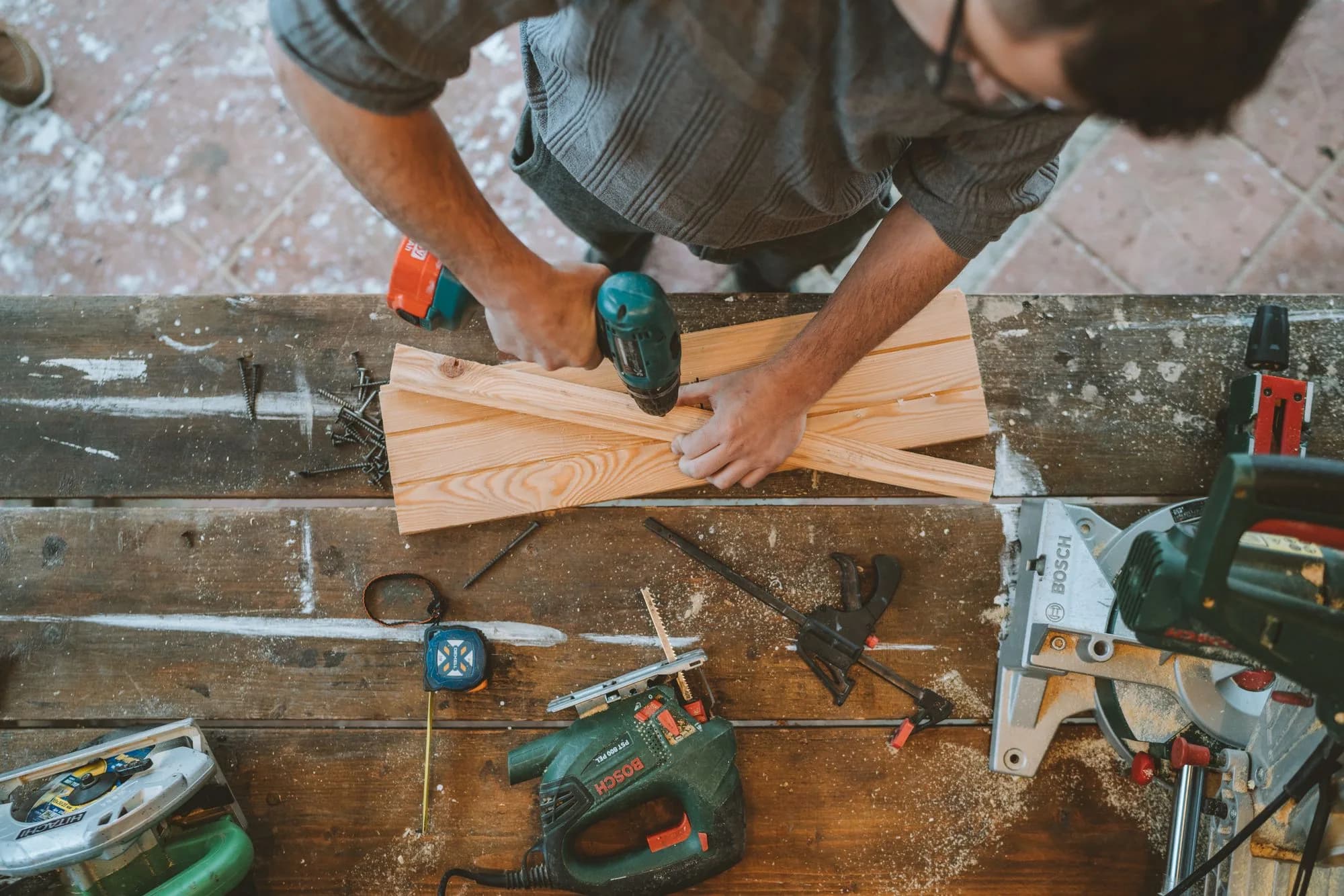
Is it cheaper to build your own deck? For most homeowners, yes, often by 30 to 40 percent. Labour typically eats up about half of what a contractor charges, and that's the chunk you can claim back by picking up a drill yourself. But the maths only works if you already own basic tools, can commit a few weekends, and are honest about the parts of the job where a mistake isn't just ugly, it's dangerous. This guide breaks down where the savings actually come from, what a DIY build genuinely costs, and where the line sits between a project worth tackling and one worth handing to a licensed pro.
TL;DR
- Labour makes up roughly half of a contractor's price, so DIY framing is where the real savings live.
- A 168 sq ft (14x12) PT pine deck runs roughly $3,360-$5,880 DIY versus $5,880-$8,400 contractor-built.
- Permits cost the same whether you swing the hammer or not, and most attached decks need one.
- Framing is learnable in a weekend or two; ledger attachment and footing depth are where mistakes turn dangerous.
- Budget $300-$600 for tools if you're starting from zero — it's a one-time cost you'll use again.
Where the Money Really Goes on a Contractor-Built Deck
Nationally, a deck installed by a contractor runs about $30-60 per square foot, according to Angi's 2026 cost data, a figure NerdWallet's own guide lands close to as well. On DeckHelm's own bands, a contractor-built pressure-treated pine deck usually falls between $35 and $50 per square foot, while cedar or redwood pushes past $45-60 or more once you add the material premium. Materials alone, PT pine framing and decking, generally cost $3-6 per square foot. So where does the rest go? Labour. Roughly half of a contractor's total price is the crew's time: framing, cutting stringers, setting footings, and finishing. That split is exactly why DIY changes the equation so much — you're not avoiding the cost of joists and screws, you're avoiding paying someone else's day rate to install them. Run your own numbers through the deck cost calculator before you commit either way; it's worth seeing the gap in dollars rather than percentages.
Permits: The Cost You Can't DIY Away
Here's the bit that surprises a lot of first-time builders. Almost every jurisdiction requires a permit for an attached deck, and that requirement doesn't care who's holding the drill. Whether you hire a crew or build it yourself on weekends, you'll likely still need to submit plans, pay a fee, and pass an inspection or two. Permit costs typically run somewhere between $150 and $500 depending on your municipality and the size of the structure. Some homeowners assume going DIY means going under the radar, but skipping the permit step is a genuinely bad idea. Unpermitted decks can complicate a home sale, void insurance claims after a collapse, and in some areas trigger a forced teardown. Read up on do I need a permit to build a deck before you order a single board, and factor the fee into both sides of your comparison, because it applies equally to the DIY and contractor totals.
The Tool List You Actually Need Before You Start
You don't need a fully kitted-out workshop to frame a deck, but a handful of tools make the difference between a frustrating weekend and a genuinely dangerous one.
- A corded or high-capacity cordless circular saw for cutting joists and decking to length
- A drill driver, ideally two, one for pilot holes and one for driving screws
- A four-foot level and a speed square for accurate, square framing
- A post-hole digger or one-person auger for footings
- A chalk line and a tape measure that won't stretch or snap under site conditions
- A hammer drill if you're attaching a ledger board to masonry
- Basic safety gear: eye protection, gloves, and ear defence for any powered cutting
If you're starting from nothing, budget roughly $300-$600 to buy this kit outright, which is a one-off cost since every tool on that list gets reused for the next home project. Renting some of the heavier items, like an auger, for a single weekend is often cheaper than buying if this is a one-time build.
Can I Build a Deck Myself? An Honest Skill Assessment
The honest answer is: parts of it, almost certainly yes. Cutting and installing joists, laying decking boards, and building a straightforward railing are all genuinely learnable skills. Plenty of confident DIYers frame a sound deck on their first attempt by following span tables carefully and taking their time with layout. Where the risk climbs sharply is ledger board attachment and footing depth, because these are the two elements holding the entire structure to your house and to the ground. Get the ledger board attachment wrong — missing flashing, under-spec fasteners, poor blocking — and you've built a structure that looks fine for months before it fails. The Consumer Product Safety Commission estimates that roughly 6,000 people a year are injured by the structural failure or collapse of a deck, porch, railing, or staircase, and ledger separation is one of the more common causes behind those numbers. That's not a reason to avoid DIY altogether — it's a reason to slow down specifically on ledger attachment, footing depth, and joist hangers, and to have that portion of the build inspected properly rather than guessed at.
A Worked Example: 14x12 Deck, DIY vs Contractor
Picture a homeowner planning a straightforward ground-level, attached deck measuring 14 by 12 feet, 168 square feet, in pressure-treated pine. They're comfortable with basic tools, have built a shed before, and want a genuine comparison before deciding. Using DeckHelm's own cost bands alongside the national Angi figures, here's roughly how the two routes compare.
| Build Route | Cost per sq ft | Estimated Total | What's Included |
|---|---|---|---|
| DIY (materials + hardware, own labour) | $20-35 | $3,360-$5,880 | Framing lumber, decking, fasteners, footings, permit fee |
| Contractor-built (PT pine) | $35-50 | $5,880-$8,400 | Materials, permit fee, licensed labour, cleanup, warranty |
| Contractor-built (cedar upgrade) | $45-60+ | $7,560-$10,080+ | As above, premium material, no framing savings |
In this example the homeowner saves somewhere between $2,500 and $4,500 by doing the framing and decking themselves, once you account for the roughly $300-$500 they spend on tools they didn't already own. That gap tracks closely with the rule of thumb that labour is about half the contractor price: on a mid-range $40 per square foot contractor quote, roughly $20 of that is labour, and $20 times 168 square feet lands right around $3,360 — close to what this homeowner pocketed.
“The homeowners who save the most money on a DIY build aren't the ones who rush. They're the ones who spend an extra weekend getting the ledger and footings right, then move fast through the framing once the foundation is solid.”
Is It Cheaper to Build Your Own Deck? The Real Answer
Yes, in dollar terms, for most straightforward ground-level or low-rise decks, provided you already have or are willing to buy basic tools and can put in the weekends. The savings come almost entirely from labour, since materials cost roughly the same whoever installs them. Where DIY stops being the cheaper option is when mistakes force a redo, when a failed inspection means paying a contractor to fix your ledger anyway, or when a tall, complex deck needs skills that genuinely take years to build. For a simple single-level deck under about 200 square feet, DIY usually wins on cost. For anything multi-level, over a walkout basement, or requiring engineered beams, get quotes and compare them properly using the deck cost calculator before deciding.
Can I build a deck myself if I have never framed anything before?
Yes, with some caveats. Start with a small, single-level design, follow published joist span tables closely, and consider having an inspector or experienced friend check your ledger attachment and footings before you deck over them. Framing itself is genuinely learnable; it's the connections you can't see afterwards that need the most care.
How much money does building a deck yourself actually save?
On a typical pressure-treated pine deck, DIY usually saves somewhere between 30 and 45 percent of the total cost, because you're avoiding roughly half the contractor's price, the labour portion, minus what you spend on tools and any mistakes.
Do I still need a permit if I build the deck myself?
Almost certainly yes. Permit requirements are based on the structure, not who builds it. Attached decks in particular are very likely to need a permit and inspection regardless of who swings the hammer.
What is the riskiest part of a DIY deck build?
Ledger board attachment and footing depth. Both anchor the structure permanently, and errors here are leading contributors to the roughly 6,000 annual injuries from deck and porch structural failures tracked by the CPSC.
Is it cheaper to build a deck myself than to buy a kit?
Building from raw lumber is usually cheaper than a pre-packaged kit once you're past a small footprint, since kits bundle in a margin for convenience. The savings narrow on very small decks where waste and trips to the lumberyard eat into the difference.
If you're weighing this decision for your own backyard, run your rough dimensions through the deck cost calculator to see DIY and contractor totals side by side, then get at least one contractor quote regardless of which route you lean towards. A real quote gives you a baseline to compare against, and a backup plan if the ledger or footing work turns out to be more than you bargained for.
Size your deck to code, free
Put these numbers into the deck cost calculator and get a code-compliant answer in seconds.
Open the Deck Cost calculator →