7 min read · Reviews
Best Deck Railing Kits: A Buyer's Guide
Wood, aluminium, cable, glass or composite: compare deck railing kit categories against the IRC 4-inch sphere rule before you buy.
Picking a deck railing kit feels simple until you're stood in a big-box aisle comparing four different systems, none of which tell you plainly whether they'll pass inspection on your deck. Deck railing kits promise an easy, code-compliant upgrade over site-built balusters, and most genuinely deliver on that. The trick is matching the right category of kit to your height, budget and view, without accidentally buying something that fails the 4 inch sphere test on install day.
TL;DR
- Every deck railing kit has to clear the same two IRC checkpoints regardless of material: 36 inches minimum height and a 4 inch maximum baluster gap.
- Wood baluster kits are typically the cheapest category to buy, but need ongoing staining or sealing.
- Aluminium and cable-rail kits sit mid-range on cost; cable needs periodic re-tensioning to keep gaps under 4 inches as it stretches.
- Glass-panel kits usually price at the top of the range but give an unbroken view, popular on waterfront decks.
- Composite and PVC kits resist rot and match composite decking, but need a fastener system rated for material expansion.
What Does a Deck Railing Kit Actually Need to Pass Code?
Under IRC R312, any guard on a deck surface more than 30 inches above grade needs to be at least 36 inches tall, measured from the deck surface to the top of the rail. That's a hard minimum, not a suggestion, and most manufacturers build their standard kits to 36 or 42 inches specifically to clear it with margin.
The second checkpoint is spacing. Balusters, cable runs or infill panels all have to be close enough together that a 4 inch sphere cannot pass through the gap anywhere along the railing. Inspectors genuinely test this with a sphere gauge, not a tape measure and a guess. Cable rail systems are the category most likely to fail here after installation, not before, because cables stretch slightly over time and gaps that started under 4 inches can creep open if the run isn't tensioned and re-checked. Before you buy any kit, it's worth running your planned spacing through the deck railing calculator so you know the baluster or cable count you actually need, rather than trusting a box label.
Wood Baluster Kits
These are the most familiar option and usually the cheapest to buy, since the core material is pressure-treated pine or cedar dimensional lumber packaged with pre-cut balusters, post caps and connector hardware. A typical wood kit sits at the lower end of the cost spectrum compared with the other three categories here, which makes it a natural fit for a straightforward rectangular deck with a modest budget. The trade-off is maintenance: wood needs periodic staining or sealing, and cut ends need proper flashing where they meet a post. Fastener choice matters more than people expect on a wood kit, since the wrong screw can cause staining or corrosion issues covered in deck screws galvanized vs stainless.
Aluminium and Cable-Rail Kits
Aluminium kits use powder-coated metal balusters or horizontal rails in a pre-welded or bolt-together panel system, and they sit in the middle of the price range, generally above wood and below glass. They're popular because they never need repainting and hold a crisp, modern line. Cable-rail kits, which run horizontal stainless steel cables through a metal frame, cost more again, largely because of the hardware needed to tension the cables correctly. Cable rail is a strong choice for a view deck since the horizontal wires disappear from a distance, but it demands more careful, ongoing spacing checks than any other category, precisely because of that stretch issue.
Glass-Panel Kits
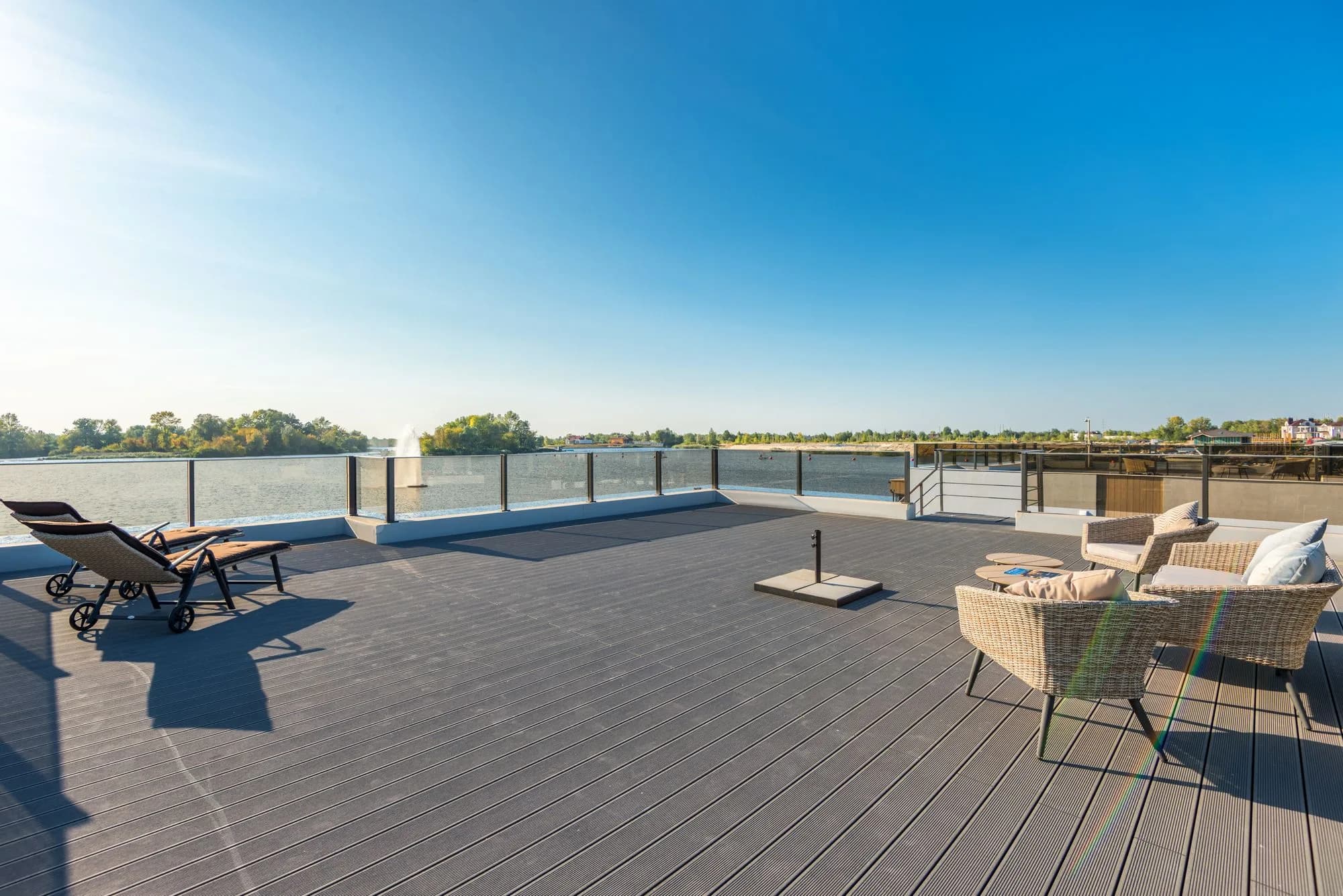
Glass-panel systems use tempered or laminated glass panels set into a base rail, sometimes frameless, sometimes framed on both edges. They sit at the top of the price range of the four categories here, reflecting the cost of tempered safety glass and the more specialised installation hardware. In return you get an unbroken view, which is exactly why these show up most on waterfront and view-lot decks. Glass doesn't have a baluster spacing problem in the traditional sense, since a solid panel obviously passes the sphere test, but you do need to check the manufacturer's rating and confirm local code accepts glass infill without additional bracing.
Composite and PVC Kits
Composite and PVC railing kits are designed to match composite decking aesthetically, and they typically price close to or a little above aluminium, depending on the finish and post-cap detailing. They resist rot and don't need staining, which appeals to anyone who has already gone composite on the decking itself to cut down on maintenance. Look closely at the fastener and bracket system on these kits, since composite rail sections can expand and contract more than wood or metal across a hot summer, and a kit engineered for that movement will hold its line better over several seasons than a cheaper copy.
A Worked Scenario: Cable Rail or Composite?
Picture a family replacing an old, sagging railing on a 40 foot lake-facing deck. Their first instinct was cable rail, purely for the view, but a call to a local railing supplier flagged the ongoing tensioning checks cable systems need near water, where humidity and temperature swings are more pronounced. They ended up choosing a composite kit with slim aluminium balusters instead: fewer sight-line gains than cable, but effectively no annual maintenance and a spacing that, once installed, doesn't move. Neither choice was wrong. It came down to how much upkeep they actually wanted to sign up for, which is the real question behind most railing decisions once code is satisfied.
Why Railing Quality Is Worth Taking Seriously
Railings aren't just a finishing touch. The CPSC estimates around 6,000 people a year are injured by structural failure of a deck, porch, railing or staircase, and a baluster kit installed with the wrong fasteners, or spacing that's slightly out of code, both sit somewhere on that list of causes. A well-built kit installed correctly is genuinely one of the cheaper safety upgrades you can make relative to the rest of a deck build.
Railings are also increasingly part of how people actually use a deck, not just a code checkbox. Houzz's 2026 outdoor trends study found 71% of homeowners hired a professional for their outdoor project, and everyday-living motivation, using the space daily rather than just for entertaining, has risen to 25% of projects. A railing kit that suits how you'll actually use the space, whether that's an unobstructed view for morning coffee or a low-maintenance option because you don't want another weekend chore, is worth weighing alongside the code minimums.
How Do the Categories Compare on Cost and Maintenance?
The table below lays out how the four categories typically stack up, using cost bands rather than specific prices, since actual cost depends heavily on deck length, finish and region.
| Kit category | Relative cost band | Maintenance | Best suited to |
|---|---|---|---|
| Wood baluster | Lowest of the four | Periodic staining or sealing | Budget builds, traditional look |
| Aluminium / cable-rail | Low-mid to mid | Cable needs periodic re-tensioning; aluminium needs none | Modern look; cable suits view decks |
| Glass-panel | Highest | Occasional cleaning only | Waterfront and view-lot decks |
| Composite / PVC | Mid to mid-high | Minimal; matches composite decking | Composite decks, low-maintenance priority |
A Quick Way to Sanity-Check Any Kit Before You Buy
Whatever kit catches your eye, run the same short checklist against it. Confirm the top rail height clears 36 inches once installed on your deck surface, not just in the marketing photo. Confirm baluster, cable or panel spacing keeps a 4 inch sphere from passing through anywhere along the run, including at corners and post transitions. Check what fastener system the manufacturer specifies, and whether it's rated for your decking material, particularly if you're mixing brands between the decking and the railing. And check post spacing and attachment requirements against your own deck footing size and depth and framing, since a railing kit is only as sound as what it's bolted to.
“Almost every railing kit on the market will clear the 36 inch height requirement out of the box, but baluster and cable spacing is where installs actually fail an inspection, so check it against a 4 inch sphere before the crew leaves site, not after.”
Do all deck railing kits meet the 4 inch sphere rule automatically?
Most are designed to, but installation matters as much as the product. Cable rail in particular can develop gaps over time as the cable stretches, so re-check spacing after the first season and periodically after that.
Can I mix a composite deck with an aluminium or cable railing kit?
Yes, that's a common and durable pairing. Just confirm the railing post attachment hardware is compatible with your decking manufacturer's warranty terms if the posts fasten near the board edge.
Are glass-panel railing kits worth the extra cost?
On a view lot, many homeowners find the unobstructed sightline worth it. On a deck without a notable view, a cable or aluminium kit usually delivers most of the visual benefit for less.
How do I know what baluster spacing my kit needs?
Run your rail length and post spacing through the deck railing calculator, which applies the 4 inch sphere rule automatically so you're not measuring gaps by eye on install day.
Do wood railing kits need different fasteners to composite ones?
Generally yes. Wood kits usually pair with galvanized or stainless screws depending on species, while composite kits often specify a coated or composite-rated screw, or a hidden clip system, to avoid loosening or surface damage.
Whichever category fits your deck and your budget, treat the height and spacing checks as non-negotiable rather than a formality, and confirm your numbers against the railing calculator before the kit is ordered, not after it's on site.
Size your deck to code, free
Put these numbers into the deck railing & baluster calculator and get a code-compliant answer in seconds.
Open the Deck Railing & Baluster calculator →