7 min read · Academy
Deck Cost Per Square Foot: 2026 Price Guide
See deck cost per square foot by material for 2026, why size changes the rate, and a table to check your quote.
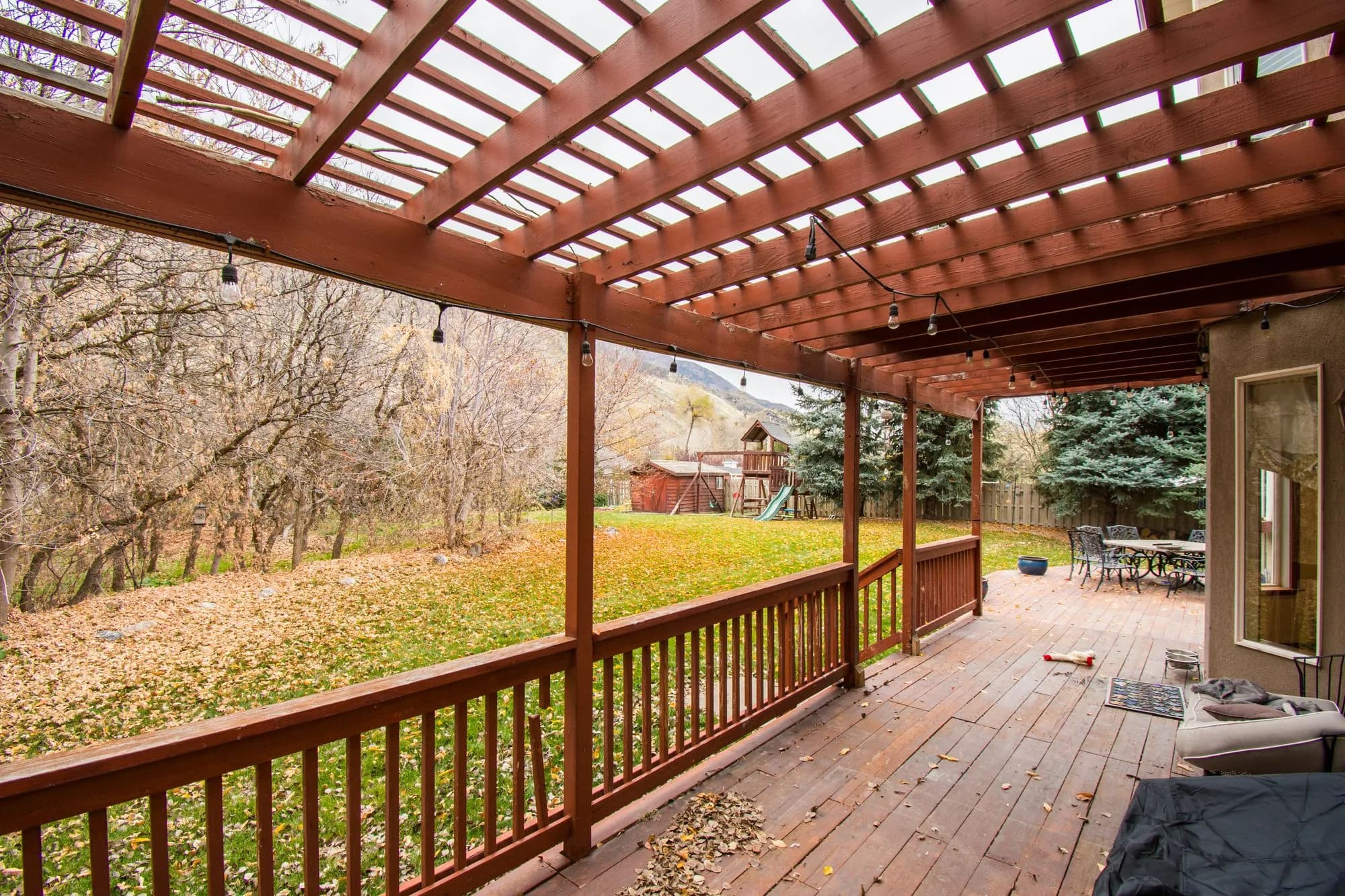
Deck cost per square foot is the fastest way to sanity-check any quote, but the number on its own hides more than it reveals. Nationally, a deck installed by a contractor runs about $30-60 per square foot in 2026, and that single range covers everything from a basic pressure-treated platform to a multi-level hardwood build with built-in seating. This guide breaks that range down by material, explains why the per-square-foot figure drops as a deck gets bigger and climbs when it gets taller or more complex, and gives you a table you can hold a quote against before you sign anything.
TL;DR
- Nationally installed decks run $30-60/sq ft, per Angi and NerdWallet's 2026 data, with material driving most of the spread.
- PT pine sits at the low end, composite in the middle, and hardwood and premium cedar at the top.
- Bigger decks often cost less per square foot because fixed costs like permits and delivery spread across more area.
- Tall or complex decks cost more per square foot because footings, stairs, and railing scale faster than deck size.
- Always compare a quote's total dollar figure and its per-square-foot rate, not just one or the other.
What Does a Deck Cost Per Square Foot in 2026?
The headline number most homeowners search for sits between $30 and $60 per square foot installed, a range confirmed by both Angi's 2026 cost data and NerdWallet's deck cost guide. Inside that band, DeckHelm's own figures narrow things further: DIY pressure-treated pine typically runs $20-35 per square foot, a contractor-built PT pine deck runs $35-50, and cedar or redwood built by a contractor runs $45-60 or more. Professional labour alone accounts for roughly $15-35 of whatever total you land on, which is why the same footprint can vary so much depending on who's doing the work and what you're building it from. Run your own dimensions through the deck cost calculator to see where your project sits inside these bands.
Why Is Material the Biggest Swing Factor?
Materials alone can differ by a factor of four before labour even enters the picture. Pressure-treated pine decking material runs roughly $3-6 per square foot, composite decking runs $5-14, and exotic hardwoods like ipe run $10-20. That's before installation, footings, or railing. A composite deck isn't necessarily worse value than pressure-treated, though; it tends to cost more upfront but less over a 20-year span because it skips the annual staining and sealing that PT lumber needs. For a full side-by-side, see our comparison of composite decking vs wood cost, and if you're looking specifically at a name-brand composite, our Trex decking cost guide breaks that down separately.
Fasteners, joist hangers, and flashing add a smaller but real slice too, usually a few dollars per square foot regardless of decking choice, since the framing underneath is almost always pressure-treated pine no matter what sits on top. A homeowner comparing two quotes at the same total per-square-foot rate should ask what decking material is actually specified, because a quote built around thin composite boards and one built around a premium capped composite line can land at the same headline number while representing very different products.
Why Does Cost Per Square Foot Drop as a Deck Gets Bigger?
This catches a lot of people off guard. A small 10x10 deck can cost more per square foot than a 20x20 deck built from the same material, because several costs don't scale with size. A building permit is a flat fee whether you're covering 100 square feet or 400. A delivery truck charges roughly the same to drop off lumber regardless of the load size, within reason. A crew still has to show up, set up, and clean up, and that overhead spreads thinner across a bigger footprint. The framing itself follows the same logic: a beam and a run of footings that support a small deck are barely more expensive than ones supporting a moderately larger one, provided the span stays within a single joist run. None of this means bigger is always cheaper in total dollars — obviously a 400 square foot deck costs more overall than a 100 square foot one — but the rate per square foot tends to soften as the project grows.
Why Do Tall or Complex Decks Cost More Per Square Foot?
The opposite effect kicks in once a deck gets tall, multi-level, or heavy on features. Height is the biggest driver: a deck standing eight feet off the ground needs deeper footings, taller posts, bracing, and usually a full staircase, none of which exist on a ground-level build. Our guide on deck footing size and depth covers how footing requirements change with height and frost depth. Stairs themselves are expensive relative to their footprint, since a stair stringer, treads, and railing involve a lot of cutting and fastening for a small amount of usable deck area. Railing adds up fast too: a deck with a long perimeter relative to its area, an L-shape or wraparound design, needs more linear feet of railing per square foot of decking than a simple rectangle. If you're planning a raised or multi-level deck, budget towards the top of the range in the table below rather than the bottom, because these features don't appear as separate line items in most rough estimates.
Deck Cost Per Square Foot by Material Tier
Here's how the major decking materials stack up on a purely per-square-foot basis, covering both DIY and contractor-installed figures where the gap is meaningful.
| Material | DIY cost/sq ft | Contractor-built cost/sq ft | Typical lifespan |
|---|---|---|---|
| Pressure-treated pine | $20-35 | $35-50 | 15-20 years with regular sealing |
| Cedar or redwood | $30-45 | $45-60+ | 20-25 years with maintenance |
| Composite decking | $25-40 | $40-60 | 25-30 years, minimal maintenance |
| Exotic hardwood (ipe, tigerwood) | N/A, rarely DIY | $50-75+ | 30-40+ years |
How Do You Use the Per-Square-Foot Number to Check a Quote?
A per-square-foot rate is only useful if you apply it correctly. Multiply the rate by your actual deck area, not your house's square footage, and make sure the quote you're comparing it to is for the same scope: materials and labour, or materials only. If a contractor quotes $28 per square foot for a composite deck, that's below the $40-60 band for contractor-built composite, which is either a genuinely good deal or a sign that something is missing from the scope — cheaper substrate, no permit fee included, or a simplified railing package. Read the line items, not just the bottom line, and cross-check against our fuller guide on how much does a deck cost for the whole-project view rather than just the rate.
It also helps to ask for the per-square-foot rate broken into materials and labour separately, since professional labour typically makes up $15-35 of the total. Two contractors quoting the same overall rate can be splitting that money very differently — one leaning on cheaper materials with a higher labour charge for detailed joinery, another using premium boards with a leaner install. Neither is automatically wrong, but knowing the split helps you judge where your money is actually going before you commit to a signature.
“Per-square-foot numbers are a screening tool, not a final answer. We've seen two quotes land at the same rate with completely different scopes hidden underneath — one included a full guardrail system and one didn't.”
What's Pushing Deck Costs Up in 2026?
Framing lumber, the backbone of almost every deck regardless of what the surface is made from, hasn't been getting cheaper. The NAHB framing lumber price index rose 1.4% week-over-week in early July 2026, was up 4.7% for the month, and 5.1% year-over-year, its highest reading since August 2025, with softwood tariffs cited as a contributing factor. That pressure feeds into the per-square-foot number on the framing side even for composite or hardwood decks, since the joists and beams underneath are still almost always pressure-treated pine. Broader demand is climbing too: industry market research puts the global decking and railing market on track to grow from roughly $11.94 billion in 2025 to $12.7 billion in 2026, a 6.4% annual growth rate, which keeps pressure on both material and labour pricing.
What is a reasonable deck cost per square foot in 2026?
For a contractor-built pressure-treated pine deck, $35-50 per square foot is reasonable. Composite typically runs $40-60, and cedar or hardwood pushes past $45-75 depending on the species and build complexity.
Why did my neighbor's deck cost less per square foot than my quote?
Size and height are the two most common reasons. A larger, simpler, ground-level deck spreads fixed costs like permits and delivery over more area, while a smaller or taller deck concentrates those costs, and stairs or railing, into fewer square feet.
Does deck cost per square foot include the permit?
It depends on the quote. Some contractors fold the permit fee into their per-square-foot rate, others list it as a separate line item. Always ask, since permit fees typically run $150-500 and can shift the effective rate on a small deck noticeably.
Is a lower cost per square foot always a better deal?
Not necessarily. A rate well below the typical band for that material is worth questioning rather than celebrating, since it can point to a thinner materials package, an unlicensed or uninsured crew, or scope missing from the estimate.
Treat the per-square-foot figure as your starting filter, then verify it against the size, height, and features of your specific project using the deck cost calculator, so you're comparing quotes on the same terms rather than guessing from a single averaged number.
Size your deck to code, free
Put these numbers into the deck cost calculator and get a code-compliant answer in seconds.
Open the Deck Cost calculator →