7 min read · Academy
How Much Does It Cost to Build a Deck?
Realistic 2026 deck cost ranges by size and material, where the money goes, and how much you save by doing your own framing.
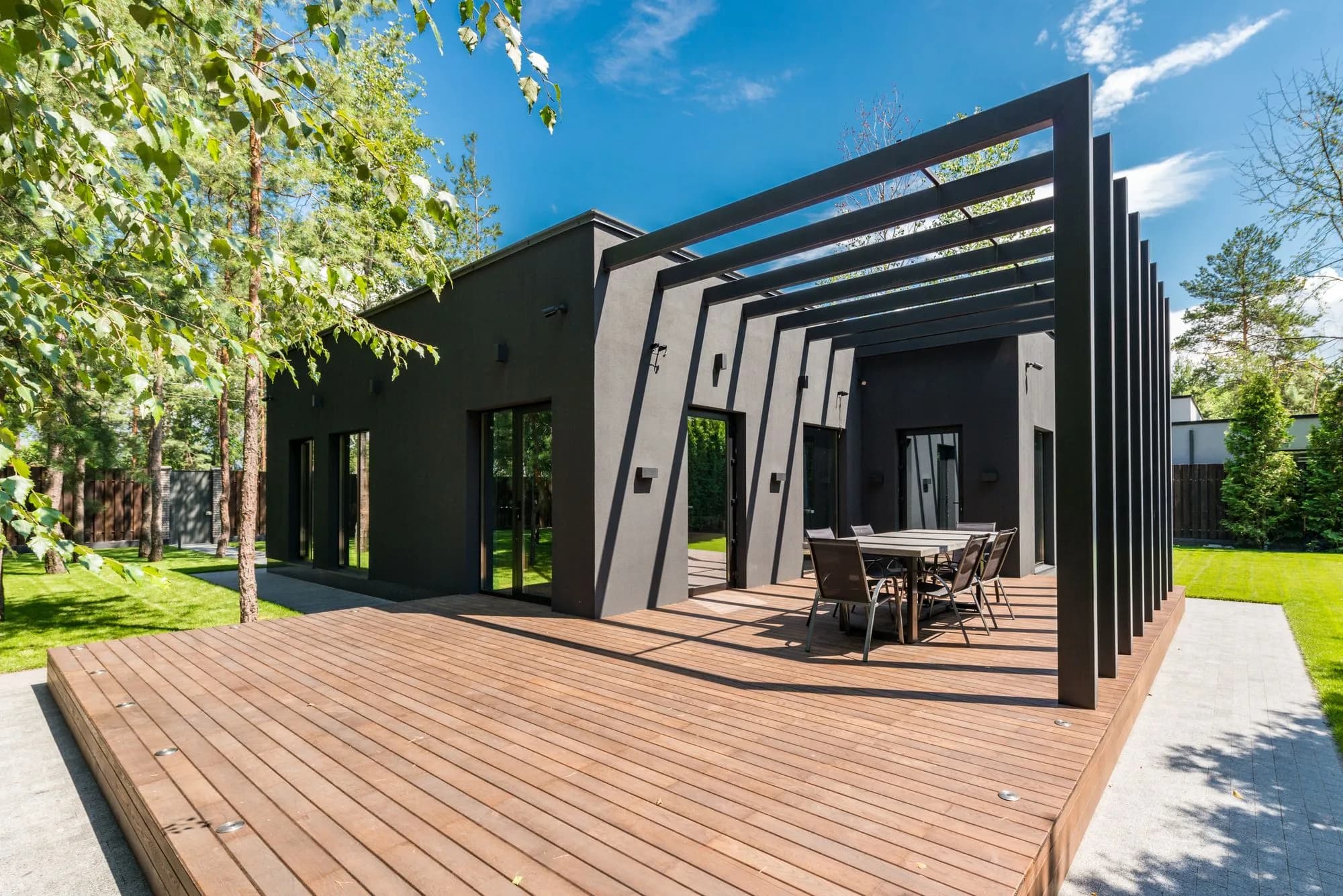
How much does a deck cost is the first question almost every homeowner asks, and the honest answer is a range wide enough to be almost useless on its own — roughly $30-60 per square foot installed nationally in 2026, covering everything from a basic pressure-treated platform to a hardwood deck with cable railing. The gap comes down to three things: material, size, and how much of the labour you do yourself. This guide breaks the national numbers down by material and by DIY versus contractor, walks through where the money actually goes on a professional build, and works a real budget for a common deck size so you can see how the pieces add up.
TL;DR
- National installed costs run roughly $30-60 per sq ft for materials and labour combined, per Angi's 2026 data.
- PT pine materials alone run about $3-6/sq ft; composite decking materials run about $5-14/sq ft; exotic hardwood runs about $10-20/sq ft.
- Professional labour alone typically adds roughly $15-35 per sq ft on top of materials.
- Deck additions return roughly 65.8-82.9% of their cost at resale, depending on material, per the 2025 Cost vs. Value Report.
- Doing your own framing and leaving decking and railing to a pro, or doing all of it yourself, is where most of the realistic savings sit.
How Much Does a Deck Cost in 2026?
The $30-60 per square foot figure from Angi's 2026 data, corroborated by NerdWallet's guide to deck costs, covers the full installed price, materials and labour together, for a typical attached deck. A small, simple pressure-treated deck sits toward the bottom of that range. A large deck in composite or hardwood, with built-in seating, a shade structure, or multi-level framing, sits at the top or above it. DeckHelm's own cost bands, built from real material and labour pricing, land in a similar place: DIY pine framing and decking typically runs $20-35 per square foot in materials alone, a contractor-built pressure-treated deck runs roughly $35-50 per square foot installed, and a contractor-built cedar or redwood deck runs $45-60 or more, once you factor in the higher material cost and the extra care those species need during installation.
Deck Cost by Material: Pressure-Treated, Composite, and Hardwood
Pressure-treated pine is still the cheapest way to frame and deck a structure, at roughly $3-6 per square foot for materials alone, and it remains the default choice for framing even on decks finished in a different surface material. Composite decking — the boards themselves rather than the frame beneath — runs roughly $5-14 per square foot, a wide range driven by brand, colour, and whether it is capped or uncapped composite. Exotic hardwoods such as ipe or cumaru sit at $10-20 per square foot for materials, reflecting both the raw cost of the timber and the harder, slower work of cutting and fastening it. Industry market research on the decking and railing market points to composite growing faster than wood overall, as homeowners increasingly trade a lower material cost for less annual maintenance. Our full composite decking vs wood cost comparison breaks the maintenance trade-off down further.
DIY vs Contractor: Where the Savings Actually Come From
Doing your own framing is where the real DIY savings live, since labour is roughly half of a typical contractor quote, and framing is the most labour-intensive stage relative to material cost. A homeowner who frames a deck themselves, using a joist span calculator and a footing calculator to size the structure correctly, then hires a contractor only for decking and railing, can realistically land closer to the DIY end of the cost range while still getting a professional finish on the visible surface. Full DIY — framing, decking and railing all handled by the homeowner — saves the most but demands the most time, tools, and confidence with a circular saw and a post-hole digger. Full contractor builds cost the most but transfer essentially all of the risk, and all of the permit paperwork, off the homeowner's plate.
| Approach | Pressure-Treated Pine | Composite | Cedar or Redwood |
|---|---|---|---|
| DIY (materials only) | $20-35/sq ft | $30-45/sq ft | $35-50/sq ft |
| Contractor (installed) | $35-50/sq ft | $40-55/sq ft | $45-60+/sq ft |
| Labour share of contractor price | ~50% | ~50% | ~50% or more |
Where Does the Money Actually Go on a Contractor Build?
On a typical contractor-built deck, labour makes up roughly half of the total price, sometimes more on a complex design with multiple levels or built-in features. That labour covers layout and excavation, footing work, framing, decking installation, railing, and stairs, plus the overhead of permits, inspections, and site cleanup. Materials make up the rest, split between the framing lumber, usually pressure-treated regardless of the finished surface, and the visible decking and railing material, which is where cost swings hardest between a basic pressure-treated board and a premium composite or hardwood. Professional labour alone runs roughly $15-35 per square foot, a range wide enough to reflect both a simple rectangular platform and a deck with curves, multiple levels, or extensive stairs. For a fuller breakdown, see our guide to labor cost to build a deck.
Why Tall or Complex Decks Cost More Than Flat, Ground-Level Ones
Height and complexity add cost disproportionately to square footage. A deck sitting three feet above grade needs full-sized footings, sized to bearing capacity and frost depth, taller posts, and a full guard system at 36 inches minimum with baluster spacing tight enough to block a 4 inch sphere, none of which a ground-level platform needs. Stairs add another layer, since every flight needs its own stringers, a landing, and often its own footing, and stairs are labour-intensive relative to the small amount of square footage they occupy — see our guide on how to build deck stairs for the full stringer and landing breakdown. A multi-level deck effectively multiplies these costs, since each level needs its own framing, its own stair connection, and sometimes its own set of footings. Two decks of identical total square footage, one flat and ground-level, one raised and split across two levels, can differ in price by thousands of dollars purely because of footings, stairs, and railing.
Worked Example: Budgeting a 12x20 Deck
A 12x20 foot deck is 240 square feet, a common size for a family that wants space for a table and a grill without taking over the whole yard. At the low end, DIY framing and decking in pressure-treated pine at roughly $25 per square foot puts total materials around $6,000. A full contractor build in pressure-treated pine at roughly $42 per square foot installed lands around $10,000. The same footprint in contractor-installed composite, at roughly $47 per square foot, comes in around $11,300, and in contractor-installed cedar at roughly $52 per square foot, around $12,500. Add a set of stairs and a taller elevation and each of those figures climbs, since footings, stringers, and railing length all increase with height. Run your own footprint through a deck cost calculator to see where it lands.
Is a Deck Worth It at Resale?
Financially, a deck is a solid investment without being a spectacular one. The 2025 Cost vs. Value Report found deck additions return roughly 65.8-82.9% of their cost at resale depending on material, a healthy return but below the very top exterior projects such as garage door or entry door replacement. That said, resale value is only part of the picture. Houzz's 2026 Outdoor Trends Study found 71% of homeowners hired at least one professional for their outdoor project, up from 65% in 2024, and the share renovating mainly for everyday living, rather than resale, rose to 25%, suggesting more homeowners are building decks to actually use rather than purely to flip.
“Homeowners who ask for a framing quote and a decking quote separately usually understand their own budget better than the ones who ask for one number, because half the cost of most decks is labour, not lumber.”
What is the average cost per square foot to build a deck?
Roughly $30-60 per square foot installed nationally in 2026, covering materials and labour together, with the exact figure depending heavily on material choice and deck complexity.
Is composite decking worth the extra cost over pressure-treated wood?
For many homeowners yes, since composite trades a higher upfront material cost — roughly $5-14 per square foot against $3-6 for pressure-treated — for lower ongoing maintenance over the life of the deck.
How much can I save by building my own deck?
The biggest savings come from doing your own framing, since labour is roughly half of a typical contractor price, with full DIY, framing through decking and railing, saving the most overall.
Does deck size affect the price per square foot?
Yes, larger decks often see a slightly lower per square foot price since fixed costs like permits and equipment mobilisation spread across more area, while very complex or multi-level decks of any size push the per square foot price up.
Do stairs and railing add much to the total deck cost?
Yes, disproportionately to their footprint, since stairs need their own footing, stringers and landing, and railing runs the full perimeter of any deck more than 30 inches above grade.
Pull your own deck's rough dimensions and target material together, then run them through a cost calculator to see where your project actually lands inside these ranges before you start collecting contractor quotes. Knowing your own number first makes every quote you get afterward much easier to judge.
Size your deck to code, free
Put these numbers into the deck cost calculator and get a code-compliant answer in seconds.
Open the Deck Cost calculator →