7 min read · News
Pressure-Treated Lumber Prices in 2026: What's Happening
NAHB's latest index shows pressure treated lumber prices at a 2026 high, driven by softwood tariffs. Here's what it means for your deck budget.
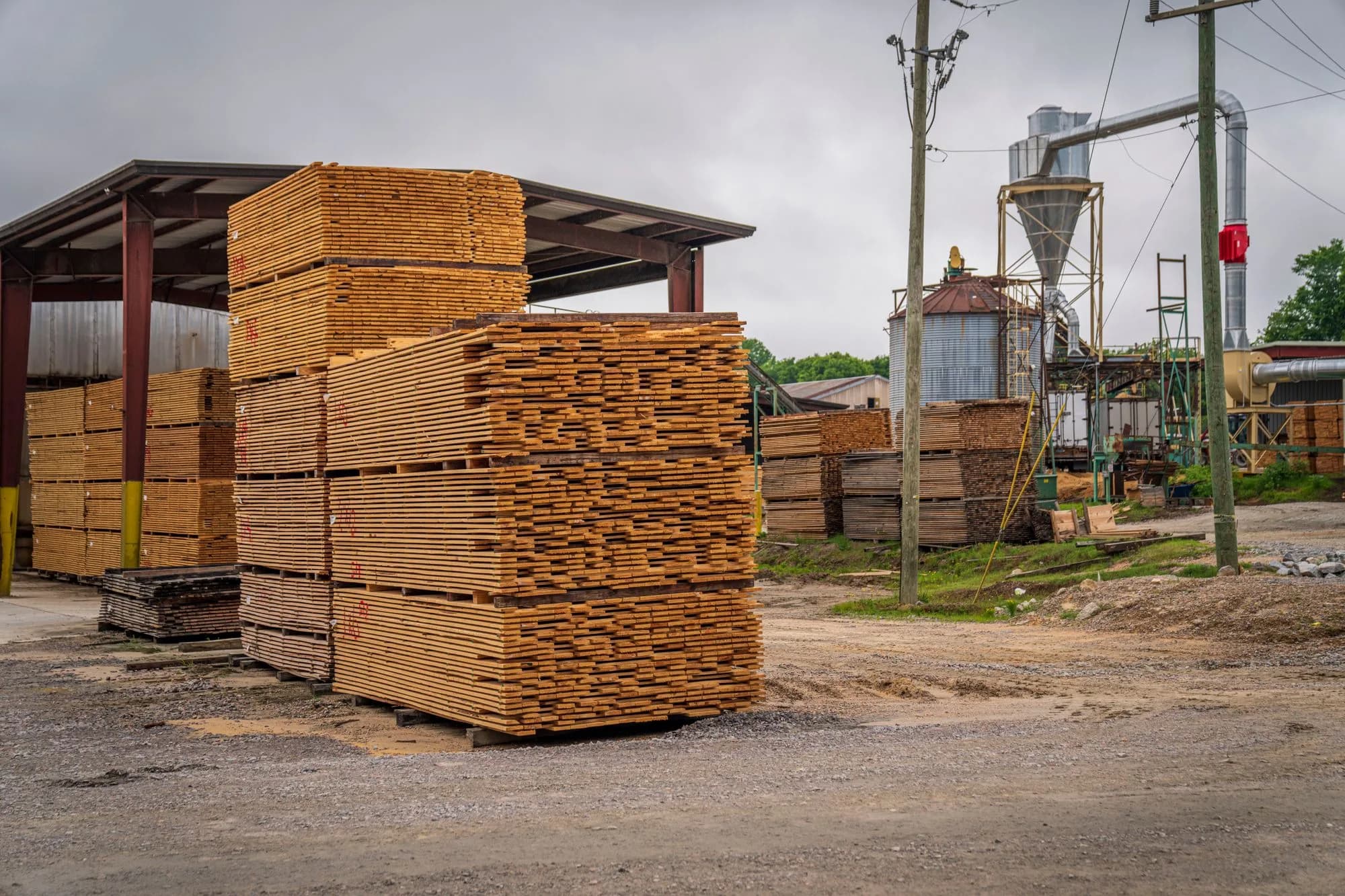
If you're pricing out a deck build this summer, the ground has shifted under your feet in the past few weeks. Pressure treated lumber prices have started climbing again, and the increase isn't just noise in a jumpy market. It's a measurable trend with a cause attached to it: tariffs on Canadian softwood.
The National Association of Home Builders tracks framing lumber prices every week, and its latest reading is the highest the index has been since August 2025. That matters because most decks in the US are still framed in PT pine, and the frame is usually the first big line item on any quote. Here's what's actually driving the move, and what it means if you're about to sign a contract.
TL;DR
- Framing lumber prices rose 1.4% week-over-week in early July 2026, and are now 4.7% higher than a month ago and 5.1% higher than a year ago — the highest level since August 2025.
- The move is tied partly to softwood lumber trade tariffs, even though preliminary Canadian antidumping/countervailing duty rates were recently cut from a combined 35.2% to 25.9%.
- PT pine is still the dominant framing material for US decks, so this index feeds almost directly into deck quotes.
- Locking in a written quote now, and buying framing lumber in one go rather than staggering purchases, limits your exposure if the trend keeps climbing.
- Composite and hardwood decking costs are less directly tied to this index, but the PT joists underneath usually aren't.
What the Latest NAHB Numbers Actually Show
NAHB's framing lumber price index rose 1.4% week-over-week in early July 2026. Stack that against a longer view and it's a steeper climb than a single weekly print suggests: prices are now 4.7% higher than a month ago, and 5.1% higher than a year ago. That combination, a small weekly move sitting on top of a much bigger monthly and annual gain, is what pushed the index to its highest point since August 2025.
For anyone comparing quotes right now, that's not an abstract statistic. Framing lumber sits under the decking boards, and on a typical PT-framed deck it makes up a meaningful chunk of the material cost referenced in guides like how much does a deck cost. When the index moves, contractors either absorb the difference short-term or pass it straight through on the next batch of quotes.
Why Are Pressure Treated Lumber Prices Climbing Again?
There isn't one single cause, but trade policy is doing a lot of the work this time. Softwood lumber trade tariffs have been part of the pricing picture for years, and mills, distributors and builders all watch duty rates closely because they get baked into the delivered cost of every board.
The twist this year is that duty rates actually came down. Preliminary antidumping and countervailing duty rates on Canadian softwood lumber were recently cut by around 10 percentage points, from a combined 35.2% down to 25.9%. On paper, that should ease pressure on prices, not add to it. In practice, markets don't move in a straight line with policy changes. Mills adjust output, distributors rebuild margin, and demand-side pressure from a busy summer building season can outweigh a single rate cut.
The Tariff Picture: Why a Rate Cut Didn't Bring Prices Down
A lower duty rate reduces the cost of importing Canadian softwood going forward, but it doesn't reset the price on lumber already sitting in a yard, bought under the old assumptions. Distributors who paid higher landed costs earlier in the year aren't going to discount existing stock just because a new rate applies to future shipments. There's also a lag between a rate change taking effect and it fully working through supply chains that stretch from a British Columbia sawmill to a lumber yard in Ohio or Georgia.
Add in normal seasonal demand, since summer is peak deck-building season across most of the country, and you get a market where a nominally friendlier tariff rate still coincides with rising prices. It's a reminder that a single policy headline rarely tells the whole pricing story on its own.
Will Prices Keep Rising Through the Rest of 2026?
Nobody can say for certain, and anyone promising a confident forecast on lumber futures is guessing. What's clear is the trend: three consecutive readings, weekly, monthly and annual, all point the same direction, and the index sits at its highest point in almost a year. That's a different situation to a single volatile week.
Softwood lumber tariffs remain a live policy area, and further adjustments to Canadian duty rates are plausible in either direction. Combine that uncertainty with a construction season already underway, and the more prudent assumption for anyone budgeting a deck this summer is that prices are more likely to drift higher than lower before autumn.
What This Means for Your Deck Budget Right Now
The practical impact depends on what you're building. A deck framed and decked entirely in PT pine feels the framing lumber index directly, in both the joists and the visible boards. A composite deck still needs a PT frame underneath, so it isn't immune either, even though the composite boards themselves track a different cost curve. Only fully steel-framed systems sidestep this particular pressure, and those remain a small share of residential decks.
Nationally, installed decking still runs a wide $30 to $60 per square foot depending on material and labour market, per Angi's cost data. The table below shows roughly where each material mix tends to sit within that range, and how exposed each one is to the current lumber trend.
| Decking material | Where it typically lands in the $30–$60/sq ft range | Framing lumber exposure |
|---|---|---|
| PT pine decking + PT frame | Lower half of the range | Highest — both frame and boards track the NAHB index directly |
| Composite decking + PT frame | Mid to upper half of the range | Partial — frame still tracks the index; boards are priced separately |
| Exotic hardwood + PT frame | Upper end of the range | Partial — frame still tracks the index; hardwood boards are priced separately |
Run your own project numbers through the deck cost calculator with current framing costs factored in, rather than working off a quote you got back in spring.
Two Practical Moves Worth Making This Summer
None of this means panic-buying lumber. It means being deliberate. First, if a contractor has given you a written quote, ask how long it's valid for and whether lumber costs are locked in or subject to a market adjustment clause. A verbal estimate from two months ago may already be out of date. Second, if you're supplying materials yourself or working with a builder who lets you, buy your framing lumber in one purchase rather than staggering it across the build. Staggered buying exposes you to whatever the index does between deliveries, and on a rising trend that's a bet against yourself. Comparing that approach against labor cost to build a deck breakdowns can help you see where lumber cost swings actually bite hardest.
“The two consecutive rate cuts on Canadian softwood didn't stop this index from climbing, which tells you the summer building season is doing at least as much work as trade policy right now, so a quote you get in July shouldn't be assumed to hold through September.”
Why did pressure treated lumber prices go up even after tariffs were cut?
Existing stock was already priced under the older, higher duty rates, and there's a lag before a new rate fully works through the supply chain, so distributors aren't discounting inventory bought before the cut. Strong summer demand is adding to that.
Is now a good time to buy lumber for a deck build?
If you're building this summer regardless, buying framing lumber in one purchase rather than staggering it, and locking in a written quote with a clear validity window, limits your exposure to further increases.
How much of a deck's total cost is framing lumber?
PT materials typically run around $3 to $6 per square foot against labour of $15 to $35 per square foot, so framing lumber is a real but not dominant share of the total, though it moves the fastest when the index shifts.
Will composite decking be affected by rising PT lumber prices?
Indirectly, yes. Composite boards are priced separately from the framing lumber index, but almost every composite deck still sits on a pressure-treated frame, so total project cost still feels some of the pressure.
Keep an eye on the weekly NAHB readings if you're mid-quote, and use the deck cost calculator to see how a lumber price move actually changes your bottom line before you sign anything. If your contractor can start sooner rather than later, that's now a genuinely useful lever, not just a scheduling preference. Find a deck builder near you if you haven't got quotes in yet, since the earlier you lock a price, the less of this trend you'll carry.
Size your deck to code, free
Put these numbers into the deck cost calculator and get a code-compliant answer in seconds.
Open the Deck Cost calculator →